
Composing music for movies is a fascinating and intricate process. From silent films to modern blockbusters, music has been a vital component in storytelling, setting the mood, and enhancing the emotional impact of scenes. This exploration delves into the history, techniques, and collaborative aspects of this art form, highlighting the evolution of film scores and their role in shaping cinematic experiences.
This comprehensive overview will cover various types of film music, including underscore, source music, and leitmotifs. It will also explore compositional techniques such as leitmotifs, thematic development, and orchestration, demonstrating how these techniques are used to evoke emotions and enhance the narrative. Furthermore, the collaborative nature of film scoring will be examined, focusing on the communication and interplay between composers, directors, and other team members.
The crucial role of musical choices in influencing audience emotions and the relationship between music and visual storytelling will be highlighted.
Historical Context of Film Music
Film music has evolved significantly alongside the medium of cinema itself, mirroring technological advancements and shifting cultural tastes. From the initial silent era’s reliance on live musical accompaniment to the sophisticated soundtracks of modern films, music has played a crucial role in shaping the cinematic experience. This evolution reflects the dynamic interplay between filmmakers, composers, and the audience.The integration of music into the filmmaking process has transformed the way stories are told and emotions are conveyed.
Initially, music served as a crucial element to enhance the narrative, but as filmmaking techniques advanced, composers increasingly sought to create music that complemented and enhanced the visual elements of the film, rather than simply accompanying them.
Silent Film Era (Early 1900s – Early 1930s)
Live musical accompaniment was essential in the silent film era. Pianists, orchestras, and sometimes even singers performed music in the theatre to accompany the projected films. This approach allowed for flexibility and ensured a lively atmosphere for the audience. The music was not always composed specifically for the film but often borrowed from existing popular songs or classical pieces.
Early composers like Percy Faith and others began to develop a specific style for film accompaniment.
The Rise of the Soundtrack (1930s – 1950s)
The advent of synchronized sound in the 1930s marked a pivotal moment. Composers began composing original scores specifically for films, creating a deeper connection between music and the narrative. The music became an integral part of the storytelling process, enhancing the emotional impact and creating atmosphere. This era saw the emergence of prominent composers like Max Steiner, who composed for films like “King Kong” and “Casablanca,” establishing a new paradigm for film scoring.
The Golden Age of Film Music (1950s – 1970s)
The 1950s and 1960s saw the development of more complex and sophisticated film scores. Composers like Bernard Herrmann, with his iconic scores for Alfred Hitchcock films, and Ennio Morricone, known for his distinctive spaghetti western scores, created memorable and distinctive musical styles for their respective eras. This period witnessed the use of more diverse instrumental arrangements and compositional techniques.
The Modern Era (1980s – Present)
Contemporary film music continues to be influenced by diverse musical genres, from pop and rock to electronic and classical. Composers such as Hans Zimmer, known for his work on “Gladiator” and “The Dark Knight,” have used innovative techniques and a wide range of musical styles to create unique and impactful scores. The use of digital audio workstations and synthesizers has further broadened the palette of sounds available to film composers.
Evolution of Film Music Styles
| Era | Key Composers | Prevalent Styles | Notable Films |
|---|---|---|---|
| Silent Film | Percy Faith, others | Classical, popular songs, live accompaniment | Early examples of film with live musical accompaniment |
| Early Sound | Max Steiner | Orchestral, dramatic | “King Kong,” “Casablanca” |
| Golden Age | Bernard Herrmann, Ennio Morricone | Orchestral, varied styles based on genre | Alfred Hitchcock films, spaghetti westerns |
| Modern Era | Hans Zimmer, James Horner | Diverse genres, electronic, innovative techniques | “Gladiator,” “The Dark Knight” |
Types of Film Music

Film music is a crucial component of the cinematic experience, significantly impacting the emotional impact and overall atmosphere of a film. It enhances the storytelling by mirroring character emotions, highlighting plot points, and setting the scene. Different types of music serve distinct purposes, creating a layered sonic tapestry that immerses the viewer in the film’s world.Film scores employ a variety of musical techniques and styles to achieve specific effects.
Understanding these types allows a deeper appreciation of how music contributes to the cinematic art form. From subtle background underscores to prominent source music, each element plays a vital role in shaping the viewer’s experience.
Categories of Film Music
Film music is categorized into various types, each with unique characteristics and functions. Understanding these categories reveals the diverse ways in which music enhances a film. The interplay of these elements creates a rich auditory landscape, affecting the narrative and emotional response.
- Underscore: This is the instrumental music composed specifically for the film, often providing a non-diegetic soundtrack. It complements the visuals, highlighting emotional beats, and establishing mood. Underscore music typically isn’t heard by the characters within the film. For example, in a scene of suspense, an ominous string melody underscores the tension, building anticipation for the impending action, even if the characters are unaware of the music.
- Source Music: This category includes music that originates from within the film’s world. This could be music played by characters (a band performing live, a radio playing a song), or other diegetic sounds. Source music is often integral to the narrative, serving as part of the setting or even driving plot progression. A romantic scene might feature a character singing a love song, emphasizing the emotional connection between characters, or a detective film could have a radio broadcast revealing crucial information.
- Leitmotifs: These are recurring musical themes associated with specific characters, places, or ideas. A leitmotif can be a short melodic fragment, a rhythmic pattern, or a harmonic progression. Their repeated use throughout the film creates a sense of familiarity and reinforces the significance of the associated element. For example, a particular motif might be associated with a villain, and its appearance whenever the villain appears serves to reinforce the viewer’s understanding of their role in the narrative.
Music and Mood
Music effectively manipulates mood and atmosphere in films. The emotional impact of a scene is often greatly influenced by the chosen music. The composer’s skill lies in selecting the appropriate type of music, instruments, and style to enhance the film’s narrative. By creating a sonic landscape that mirrors the visual elements, music creates an immersive experience for the viewer.
- Creating Atmospheres: Music can create a wide range of atmospheres, from joyful celebrations to profound sadness. The composer uses various techniques to achieve these effects, including instrumentation, tempo, and dynamics. A slow, somber piece using strings and low brass might create a mood of melancholy, whereas a fast-paced, upbeat piece using percussion and horns might create a lively atmosphere.
- Highlighting Plot Points: Music can also emphasize specific plot points. A dramatic crescendo during a pivotal moment can heighten tension and anticipation. A sudden shift in music style might signify a change in the narrative’s direction or a significant character development.
Film Genres and Music Styles
Different film genres often utilize specific music styles to enhance the overall experience. The selection of music reflects the emotional tone and thematic elements characteristic of each genre. The use of music helps to quickly identify the genre to the viewer.
| Genre | Typical Music Styles |
|---|---|
| Action | Energetic, rhythmic music with percussion and brass instruments, often with a strong beat. |
| Comedy | Upbeat, playful music with a lighthearted feel, possibly featuring comedic sound effects. |
| Drama | Emotional, nuanced music with a focus on string instruments, often reflecting the characters’ inner turmoil. |
| Horror | Suspenseful, eerie music with a heavy use of strings and woodwinds, possibly featuring dissonant harmonies. |
| Romance | Melodic, romantic music with a focus on strings and possibly vocals, creating a tender and passionate atmosphere. |
Compositional Techniques for Film
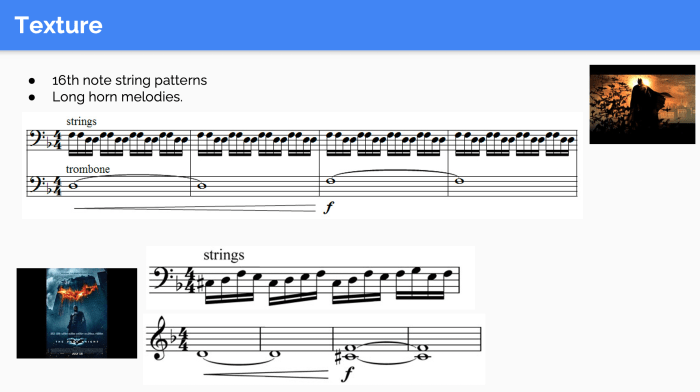
Film scores are meticulously crafted to enhance the narrative, evoke emotions, and create a cohesive atmosphere. Beyond the melodic and harmonic elements, composers employ various compositional techniques to achieve specific effects. These techniques, when skillfully utilized, can dramatically impact the viewer’s experience and understanding of the film’s message.
Leitmotifs
Leitmotifs are recurring musical phrases associated with specific characters, objects, or ideas in a film. This technique creates a powerful link between the music and the narrative, allowing the audience to instantly recognize and associate specific musical ideas with important elements of the story. The use of leitmotifs can heighten dramatic tension or build emotional resonance through repetition and variation.
- A leitmotif for a heroic character might be a powerful, triumphant fanfare, while a motif for a villain might be dark, menacing, and unsettling. The recurring musical theme, subtly altered over time, can reflect the character’s evolution or the unfolding conflict.
- In “Star Wars,” John Williams’s iconic “Force theme” is a prime example of a leitmotif. This memorable melody appears in various forms throughout the saga, always associated with the concept of the Force, reinforcing its importance in the story.
Thematic Development
Thematic development involves transforming and elaborating upon existing musical ideas. This technique allows composers to explore the emotional depth of a scene or character while maintaining a sense of musical unity. Composers use techniques like fragmentation, augmentation, diminution, and modulation to develop the thematic material, creating a dynamic and evolving musical landscape.
- Thematic development can be used to portray the progression of a character’s emotional journey, escalating the intensity of a scene, or building suspense. As a character confronts a challenge, the musical theme associated with them might become more agitated or fragmented, reflecting the increasing tension.
- In Alfred Hitchcock’s films, the use of thematic development in the score often builds suspense and creates a sense of impending doom. Musical ideas are subtly transformed, reflecting the growing unease and the unfolding narrative.
Orchestration
Orchestration refers to the strategic use of different instruments and their combinations to achieve specific sonic effects. The choice of instruments, their dynamic levels, and the interplay between them can evoke a wide range of emotions and create a unique sonic palette for each scene. By varying instrumentation and timbres, composers can shape the emotional impact of a scene and emphasize its importance within the film’s narrative.
- A scene of quiet contemplation might be scored using solo strings, while a thrilling chase scene might feature brass instruments and percussion. The choice of instrumentation can profoundly affect the emotional impact of a given scene.
- Consider the contrasting orchestral palettes employed in a film like “The Lord of the Rings.” The epic scope of the story is reflected in the powerful use of the full orchestra, while quieter moments might use solo woodwinds or harp to create a more intimate atmosphere.
Comparison Across Genres
The application of compositional techniques varies across different film genres. In action films, composers often use strong rhythmic patterns, driving rhythms, and percussive elements to create excitement and suspense. In romantic dramas, they might emphasize lyrical melodies, intimate instrumental combinations, and subtle harmonic shifts to evoke feelings of love and longing. Furthermore, horror films frequently utilize dissonant harmonies, unsettling rhythms, and unusual timbres to generate a sense of fear and dread.
Summary Table
| Compositional Technique | Typical Application in Film |
|---|---|
| Leitmotifs | Identifying characters, objects, or ideas with specific musical themes. |
| Thematic Development | Exploring the emotional depth of scenes or characters through musical transformation. |
| Orchestration | Utilizing specific instruments and their combinations to create unique sonic effects. |
Collaboration in Film Scoring
Film scoring is a collaborative art form, demanding close communication and understanding between the composer, director, and other members of the production team. A successful score seamlessly integrates with the visual narrative, enhancing the emotional impact of the film. The creative process requires a dynamic interplay of ideas, feedback, and compromise.The success of a film score hinges on the ability of the composer to interpret the director’s vision, and for the director to understand the composer’s unique approach to music.
This requires clear communication and a shared understanding of the film’s thematic elements, emotional arc, and stylistic preferences. Effective collaboration ensures that the music serves the film, not the other way around.
Collaborative Process Overview
The collaborative process in film scoring typically involves multiple stages of interaction and feedback. Composers often meet with the director to discuss the overall tone and style of the film, and specific musical needs for individual scenes. This initial conversation establishes a common ground and helps define the musical palette.
Importance of Communication
Clear communication is paramount. The director must articulate their vision for the music, describing desired moods, tempos, and emotional responses. The composer, in turn, must effectively convey their musical ideas and propose options for different scenes. Regular meetings, detailed scene breakdowns, and the use of visual aids can all contribute to a shared understanding and reduce potential conflicts.
Impact of Creative Differences
Creative differences are inevitable in any collaborative process. Composers may have differing interpretations of the director’s intentions, leading to adjustments and revisions. Sometimes, differing artistic approaches can result in a more nuanced and compelling final product. However, conflicts can arise if the communication channels are not open and constructive. Open dialogue and mutual respect are crucial in navigating these challenges.
Example Scoring Session
A scoring session for a dramatic scene in a historical film might proceed as follows:
- Initial Consultation: The director and composer meet to discuss the scene’s visual narrative, emotional core, and desired musical impact. The director provides context, describing the historical setting, characters’ emotional states, and the visual elements. The composer proposes initial musical ideas, perhaps drawing inspiration from historical period music or thematic elements of the film. The goal is to establish a shared understanding of the desired emotional landscape.
- Scene Breakdown: The director and composer review the scene’s key visual moments. This includes a detailed discussion of the actions, dialogue, and visual cues. The composer may suggest specific musical motifs or textures to accompany particular moments. This detailed analysis ensures the music aligns with the visual narrative.
- Initial Scoring: The composer begins writing a musical sketch for the scene. This sketch might include instrumental choices, rhythmic patterns, and melodic ideas. It is a preliminary exploration of how music can support the scene’s emotional and narrative thrust.
- Feedback and Revision: The composer presents their sketch to the director and perhaps the editor. The director provides feedback, suggesting changes or additions to better reflect the scene’s visual and narrative elements. This process allows the music to be refined and tailored to the specific needs of the scene.
- Refined Scoring: The composer revises the music based on the director’s feedback. This may involve adjusting instrumentation, tempo, dynamics, or melodic lines. The aim is to create a musical depiction that is both evocative and supportive of the scene’s emotional core.
- Finalization: Once the music is finalized for the scene, it is then integrated into the film’s soundtrack. The composer ensures the transitions and integration of the music are seamless and contribute to the film’s overall emotional arc. This is a critical stage where the composer works closely with the editor to ensure the musical moments match the visual cues precisely.
Musical Choices and Emotional Impact
Film music is not merely background noise; it’s a powerful tool that profoundly shapes the audience’s emotional response and understanding of the narrative. The deliberate choices made in musical composition – from tempo and instrumentation to harmony and melody – directly influence the viewer’s interpretation of the scene and the overall film. This intricate interplay of sound and image is a cornerstone of effective storytelling.Music in film acts as a subtle yet crucial layer of meaning, often amplifying the visual narrative and adding emotional depth.
It can foreshadow upcoming events, build suspense, or evoke cathartic responses, all while remaining integral to the film’s atmosphere and overall emotional impact. These musical choices are not arbitrary; they are carefully orchestrated to evoke specific feelings and reactions in the audience.
Tempo and its Emotional Effect
Tempo, or the speed of the music, is a powerful tool in conveying emotion. A fast tempo, often with a driving rhythm, can create excitement, anxiety, or even a sense of urgency. Conversely, a slow tempo can evoke feelings of melancholy, nostalgia, or serenity. For instance, a tense chase scene in an action film might be accompanied by a fast-paced score with a driving rhythm, while a poignant moment of reflection in a drama film might be underscored by a slow, melancholic melody.
Instrumentation and its Emotional Impact
The specific instruments used in a film score can evoke different emotional responses. Orchestral scores, with their rich and complex textures, often lend an air of grandeur or drama. A solo piano piece might convey intimacy or introspection, while a combination of strings and woodwinds can create a sense of mystery or longing. The choice of instrumentation in a film score is often deliberate, tailored to enhance the mood and emotion of the specific scene.
A brass section might be used to convey triumph or aggression, while a flute or oboe might evoke a sense of beauty or fragility.
Harmony and its Emotional Connotation
Harmony, the combination of different musical notes, can also profoundly influence the emotional impact of a film score. Major chords typically convey happiness or optimism, while minor chords often suggest sadness, sorrow, or tension. Dissonance, or the jarring combination of notes, can be used to create a sense of unease, anxiety, or impending danger. This interplay of harmonic structures in film music is crucial in creating a cohesive emotional landscape.
For example, a triumphant victory scene in a war film may feature a strong, major key chord progression, while a scene of betrayal or conflict may use dissonance to create unease.
Musical Foreshadowing and Suspense
Music can be used to foreshadow events or build suspense. A recurring motif, a specific melody or rhythmic pattern, can be introduced subtly in an earlier scene, only to return with heightened intensity later, hinting at an important event or character’s return. Similarly, rising intensity in music can be a powerful tool for building suspense, while a sudden change in mood can foreshadow a dramatic shift in the plot.
Music can be employed to enhance the emotional depth of the film by foreshadowing events or creating suspense, making the viewing experience more engaging and emotionally rich.
Creating Cathartic Moments
Music plays a vital role in creating cathartic moments, where emotions are released or resolved. A powerful and emotionally resonant melody, perhaps played by a full orchestra, can amplify a moment of triumph, loss, or reconciliation, allowing the audience to fully experience the emotional weight of the scene. A dramatic shift in the musical style or tempo during such moments can be instrumental in creating a lasting impact.
Emotional Evocation in Different Genres
The use of music varies significantly across different film genres. Action films often use fast-paced, energetic scores with driving rhythms and percussive instruments to heighten the excitement and action. Romantic films frequently incorporate lyrical melodies and orchestral arrangements to convey feelings of love and longing. Horror films frequently use dissonant harmonies, unsettling rhythms, and unsettling sounds to create a sense of dread and fear.
Musical comedies often use catchy tunes and upbeat tempos to reinforce the humor and lightheartedness.
Emotional States and Musical Cues
| Emotional State | Musical Cues |
|---|---|
| Joy | Fast tempo, major chords, bright instrumentation |
| Sadness | Slow tempo, minor chords, strings |
| Fear | Fast tempo, dissonant chords, sudden changes in dynamics |
| Anger | Aggressive instrumentation, loud dynamics, dissonant harmonies |
| Suspense | Rising intensity, minor chords, use of silence |
| Hope | Slow tempo, hopeful melody, gradual increase in volume and instrumentation |
| Triumph | Powerful chords, full orchestra, major key, strong rhythmic drive |
Music and Visual Storytelling
Music in film transcends mere background noise; it actively participates in the narrative, creating a profound and multifaceted connection with the visual elements. This symbiotic relationship, where music and visuals work in tandem, amplifies the emotional impact of a scene, guiding the viewer’s interpretation and enriching the overall cinematic experience. The power of music lies in its ability to evoke specific feelings, enhance mood, and establish atmosphere, thereby enhancing the impact of the visual elements.Music acts as a powerful tool in film, augmenting the visual storytelling.
It can emphasize key moments, build suspense, or convey a sense of time and place. The skillful use of musical cues can profoundly influence how audiences perceive and respond to the visuals unfolding on screen. The interplay between sound and image creates a richer, more immersive cinematic experience, deepening the emotional resonance and understanding of the narrative.
The Enhancement of Visual Elements
Music effectively complements visual elements, adding depth and complexity to the narrative. Consider a scene depicting a character’s triumphant victory. Fast-paced, uplifting music, with a strong rhythmic drive, reinforces the visual spectacle of the triumph, amplifying the feeling of joy and celebration. Conversely, a slow, melancholic melody can enhance a scene depicting a character’s profound loss, making the viewer feel the full weight of the tragedy.
Music and Atmosphere
Music profoundly shapes the atmosphere of a scene. A scene set in a bustling marketplace might benefit from lively, energetic music with a variety of instruments. This musical choice reinforces the visual representation of a vibrant and bustling atmosphere, drawing the viewer into the scene. Conversely, a scene set in a dark, ominous forest might feature dissonant, suspenseful music to enhance the fear and foreboding evoked by the visual elements.
The interplay between music and visual elements contributes significantly to the creation of a rich and immersive atmosphere.
Corresponding Musical and Visual Elements, Composing music for movies
| Visual Element | Corresponding Musical Element | Example |
|---|---|---|
| Character introduction | Theme music, establishing melody | A new character entering a scene may have a distinct musical theme introduced, highlighting their personality and role in the narrative. |
| Action sequences | Fast-paced, energetic music | A car chase scene will often feature high-energy music with a strong rhythmic drive to emphasize the urgency and excitement of the action. |
| Emotional moments | Melodic and expressive music | A scene of intense sadness or joy can be supported by music that is both lyrical and emotionally evocative. |
| Transition between scenes | Transitional music cues | A shift from one scene to another can be marked by music that signals a change in location, time, or mood. |
| Suspenseful moments | Building tension, dissonant harmonies, suspenseful instruments | A suspenseful scene in a horror film often involves music that builds in intensity, employing dissonant harmonies and suspenseful instruments like strings and brass to create a sense of foreboding and anxiety. |
| Character interaction | Dynamic music that changes with the interaction | Music can be used to reflect the changing dynamic of an interaction between characters, whether it is a moment of agreement or conflict. |
Music for Specific Film Genres

Film music is not merely background noise; it actively shapes the audience’s emotional response and understanding of the narrative. The style of music employed significantly impacts the viewer’s interpretation of a film’s genre, amplifying its mood and tone. Different genres necessitate different musical approaches, and composers carefully craft soundscapes that resonate with the specific characteristics of each.The musical choices in a film genre reflect the genre’s intended emotional impact.
Action films often utilize dynamic, energetic scores to heighten the sense of excitement and urgency, while romantic films employ softer, more melodic themes to evoke feelings of love and longing. Horror films frequently use dissonant and unsettling music to build suspense and fear. These variations in musical style contribute significantly to the overall effectiveness of the film’s storytelling.
Action Genre
Action films typically utilize powerful, percussive instruments like drums and brass to create a sense of intensity and excitement. Frequently, scores feature fast tempos and driving rhythms, mirroring the fast-paced action sequences. Electronic sounds and synthesized effects can be incorporated to enhance the dynamism and technological aspects of the action.
- The Dark Knight (2008) utilizes a score that is both dramatic and intense. The use of strings and percussion builds tension and suspense, especially during action sequences. The score also features moments of emotional depth and vulnerability, which are balanced by the intense action.
- Mad Max: Fury Road (2015) is characterized by a driving, energetic score. The score uses a wide range of instruments and effects, blending traditional orchestral elements with electronic sounds. This approach enhances the film’s sense of relentless action and visually stunning sequences.
Romance Genre
Romantic films often feature evocative melodies and heartfelt harmonies. The music often evokes a sense of longing, tenderness, and intimacy. The use of strings, especially violins and cellos, is common, creating a soft and emotional atmosphere.
- La La Land (2016) employs a score that blends jazz, classical, and pop elements. The music emphasizes the emotional connection between the characters and reflects the film’s romantic themes.
- Titanic (1997) utilizes a sweeping orchestral score with soaring melodies to portray the romance between the protagonists. The use of string instruments is prominent, creating a sense of grandeur and emotional depth.
Horror Genre
Horror films frequently utilize dissonant harmonies, unsettling melodies, and sudden, jarring sound effects to create a sense of unease, dread, and suspense. Music in horror often employs a variety of instruments, including strings, woodwinds, and percussion, to create a sense of atmosphere and to build tension and anticipation.
- The Exorcist (1973) employs a haunting and dissonant score that mirrors the film’s terrifying imagery and themes. The score utilizes a variety of instruments to create a sense of unease and to heighten the tension of the supernatural events.
- Psycho (1960) is known for its unsettling and suspenseful musical cues. The score uses strings and other instruments to build tension and dread, often employed in combination with sudden, jarring sound effects, which reflect the film’s suspense and psychological elements.
Table of Genre-Specific Musical Traits
| Genre | Examples | Musical Traits |
|---|---|---|
| Action | The Dark Knight, Mad Max: Fury Road | Powerful, percussive instruments, fast tempos, driving rhythms, electronic sounds |
| Romance | La La Land, Titanic | Evocative melodies, heartfelt harmonies, strings (violins, cellos), soft and emotional atmosphere |
| Horror | The Exorcist, Psycho | Dissonant harmonies, unsettling melodies, sudden, jarring sound effects, building tension |
Challenges and Trends in Film Music
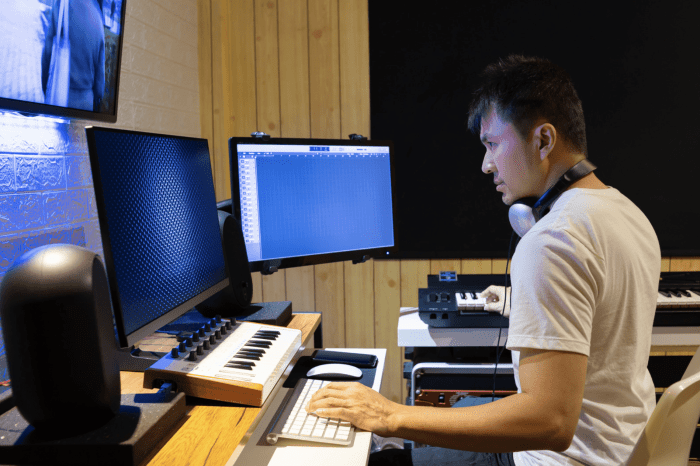
Film music, a crucial element in cinematic storytelling, is constantly evolving. Composers face a complex interplay of creative desires, technological advancements, and practical considerations. This dynamic landscape presents both challenges and exciting new possibilities for the art form.Modern film scoring requires a nuanced understanding of these challenges and emerging trends to successfully navigate the creative and technical landscape.
Budget constraints, creative limitations, and the ever-shifting technological horizon all impact the compositional process, necessitating adaptability and innovation.
Budget Constraints and Creative Restrictions
Film music budgets vary greatly depending on the film’s scale and production company. Smaller independent films often have limited budgets, forcing composers to work with fewer resources, potentially impacting the complexity and scope of the score. Major studio productions, while offering more financial backing, may impose strict creative restrictions, demanding adherence to specific thematic requirements or style guidelines.
This can sometimes lead to a compromise in the composer’s artistic vision.
Technological Advancements and Electronic Music
Technological advancements have profoundly altered the landscape of film music. Digital audio workstations (DAWs) and sophisticated sound design tools empower composers with unprecedented control over sonic textures and effects. This has fostered the increased use of electronic music in film scores, allowing for unique soundscapes and innovative approaches to instrumentation. The accessibility of these tools, however, also poses challenges related to copyright and ownership of digital audio material.
Non-Traditional Instrumentation and Hybrid Approaches
Composers are increasingly incorporating non-traditional instruments and sound design elements into their scores. This trend reflects a broader cultural shift towards embracing diversity and incorporating unique sonic palettes. Hybrid approaches, blending traditional and electronic instruments, are common, yielding scores with distinct and captivating textures. For instance, a film score might incorporate a traditional string section alongside synthesizers and field recordings.
This hybridity allows for a more nuanced and evocative sonic palette.
Examples of Modern Film Scores
Modern film scores demonstrate the integration of these trends. Scores for films like “Arrival” (2016) exemplify the use of a sophisticated electronic soundscape interwoven with traditional instrumentation. The score effectively complements the film’s themes and visual narrative, illustrating how composers are successfully adapting to the evolving landscape. Other scores may utilize innovative instrumentation, such as incorporating unusual percussive instruments or incorporating a specific ambient sound design.
Evolving Technology and Trends in Film Music
| Technology/Trend | Description | Example |
|---|---|---|
| Digital Audio Workstations (DAWs) | Powerful software for composing, recording, and editing music. | Logic Pro X, Pro Tools |
| Electronic Music Integration | Increased use of synthesizers, samplers, and other electronic instruments. | “Arrival” (2016) score |
| Non-Traditional Instrumentation | Incorporating unusual instruments and sound effects. | Film scores featuring field recordings, unusual percussive instruments |
| Hybrid Approaches | Blending traditional and electronic instruments. | Scores incorporating a traditional string section with synthesizers and ambient sounds |
Final Summary: Composing Music For Movies
In conclusion, composing music for movies is a complex yet rewarding endeavor. From the historical context to the collaborative process, and the impact of musical choices, this discussion provides a rich understanding of the art of film scoring. The interplay between music and visual storytelling is paramount, shaping the emotional landscape of a film. Modern trends and challenges in the field are also considered, demonstrating the enduring power of music in cinema.
Clarifying Questions
What are some common challenges faced by film composers today?
Budget constraints, creative restrictions imposed by directors, and the ever-evolving landscape of film technology are significant challenges. Balancing artistic vision with practical considerations is crucial.
How does the choice of instrumentation affect the emotional impact of a film score?
Different instruments evoke diverse emotions. For example, a string section might create a sense of intimacy, while brass instruments can convey excitement or grandeur.
What is the difference between underscore and source music?
Underscore is music composed specifically for a film, while source music is pre-existing music used to enhance the scene (e.g., a song playing during a dance scene).
How can music be used to foreshadow events in a film?
Musical cues, such as rising tension in the harmony or a change in tempo, can subtly hint at upcoming events or conflicts without explicitly revealing them.